
Table of Content
- What is live roulette and how does it work online?
- Why players choose live casino roulette online
- Live roulette rules, table layout, and the aim of the game
- Live roulette bets and payouts explained
- Live roulette variants available online
- How to choose the best live roulette online casino
- How to play live roulette online step by step
- Tips for a better live roulette experience
- FAQ: Live Roulette Questions Answered
"The method is always the same: deposit, verify the video stream stability, parse the bonus wagering terms in plain English, and request a withdrawal to see the actual payout timeframe. Live roulette offers an engaging atmosphere and visible physical mechanics, but getting distracted by multipliers or chasing losses is a real risk. Transparency about the odds, the house edge, and the harm-minimisation tools available is what separates a reliable platform from a fast drain on your bankroll." — Cameron "Cam" Ellery, PlayWise NZ
Key takeaways before you read further:
- Live roulette streams a real wheel and dealer to your device. Results come from physics, not software.
- European roulette carries a 2.70% house edge (RTP of roughly 97.30%); French tables with La Partage cut it to 1.35%. Steer clear of American roulette's 5.26% edge.
- Bonus wagering contribution for live roulette typically sits at just 5 to 10%, so a seemingly modest bonus can demand thousands in turnover.
- Set a session bankroll of 40 to 50 base-bet units, cap losses at 20 to 25% of that budget, and activate deposit limits before your first spin.
- There is no demo mode for live dealer tables. Every chip is real money.

What is live roulette and how does it work online?
Live roulette is an online casino game format that streams a physical roulette wheel, an actual ball, and a human dealer directly to your screen in real time. You place bets through a digital interface. Unlike standard RNG (Random Number Generator) roulette, where an algorithm simulates the outcome, online live roulette derives its results from the tangible physics of the spinning wheel. Getting your head around this hybrid format is the first step before evaluating any online live roulette casino.
The underlying technology bridges land-based casino hardware with digital betting systems. Every table relies on high-definition cameras, optical scanners, and instant data processing to bring the real wheel into the digital space. For players, this means an immersive multiplayer format offering instant results and payouts natively integrated into the interface. Live roulette currently accounts for roughly 35% of all live-dealer tables and around 40% of live casino revenue, making it the single most popular live-dealer game worldwide.

Real dealer, real wheel, and live stream
The core of the live casino roulette experience is built around physical tangibility: a real dealer, a physical wheel, and real-time interaction. In bespoke studio setups, operators deploy between six and eight 4K-resolution cameras per table, running at up to 60 frames per second. These lenses capture overhead angles, the dealer's actions, and the exact moment the ball drops into the pocket.
"Optical Character Recognition (OCR) technology automatically reads the results of the roulette wheel for instant round completion in real time." — GrowthMarketReports, Live Dealer Casino Market Analysis. https://www.growthmarketreports.com
So the physical wheel's result translates to digital data within fractions of a second. Game Control Units (GCUs) serve as the command centre at each table, encoding the video stream and synchronising the dealer's physical actions with the betting interface. High-definition streaming combined with real-world mechanics creates a gaming experience that is not only engaging but demonstrably fair. You watch the ball land, hear the dealer announce the result, and experience verifiable randomness that serves as a genuine trust signal. Key 2026 trends also include AI-driven interface personalisation and 5G-optimised streaming for mobile, reducing latency to below 250 ms even on cellular networks.

How betting and results are shown in the interface
All actions related to placing a bet are managed through a digital betting interface layered over the live stream. In any live roulette online game, you manage your chips on a digital table layout while watching the live countdown. Before each spin, the interface highlights acceptable chip values, the total current bet, and a dynamic spin timer, usually dictating a strict 15- to 30-second betting window.
When the timer expires, the interface locks to prevent further chip placement, and the dealer announces that bets are closed. Following the spin, the OCR system identifies the winning number, immediately illuminating it on your screen. The software then processes payouts automatically, updating your bankroll without requiring manual intervention from the dealer. Historical data, such as "hot" and "cold" numbers, are continually logged on screen, along with saved favourite-bet buttons and a racetrack layout for quick repeat wagers.
Worth remembering, though: past spins never influence the next spin in roulette. Each result is independent.

Why players choose live casino roulette online
Players predominantly gravitate to live casino roulette online because it replicates an authentic casino atmosphere, provides demonstrably transparent results, and enables social interaction absent in software-only variants. The availability of multiple game styles, spanning classic and modern multiplier variants, also supports different strategic approaches and bankroll sizes.
Industry data shows live tables average roughly 42 percent longer session times than standard RNG roulette games, largely owing to real-time interaction and deeper immersion (industry overview, non-peer-reviewed). The convenience of being able to play live online from a mobile device while retaining the tangible trust factor of a physical wheel frequently positions live dealer roulette as the preferred format for both casual and seasoned players.

Key advantages over standard online roulette
The defining difference between live and standard formats lies in the physical oversight and the related psychological trust factor. Standard online roulette relies strictly on regulatory-certified RNG algorithms. While mathematically fair, the digital isolation leaves some players sceptical. That scepticism is understandable, honestly.
Live formats introduce a real dealer and an observable physical process. Certified wheels, precision-engineered and inspected by entities like eCOGRA and GLI, remove any underlying algorithmic doubt. Independent auditors use Chi-Squared tests (requiring p-values above 0.01), Kolmogorov-Smirnov distribution checks, and Runs Tests to certify randomness across millions of simulated and actual spins.

"Live roulette is one of the most transparent forms of online gaming, backed by real-world mechanics, digital oversight, and human professionalism." — GrowthMarketReports, Live Dealer Casino Market Analysis. https://www.growthmarketreports.com
The gaming experience connects players with visible physical outcomes, which intrinsically enhances trust. You see the ball land, you hear the dealer call the number, and you experience the rhythm of the game exactly as it exists in a brick-and-mortar venue.
Pros
- Verifiable physical randomness: you watch every spin in real time.
- Social interaction via live chat with the dealer and other players.
- Multiple camera angles and slow-motion replays (on selected tables) for a cinematic feel.
- Wide variant choice, from classic European to Lightning Roulette multipliers.
Cons
- Higher minimum bets (typically NZ$0.50 to NZ$1.00 vs NZ$0.10 for RNG).
- Strict betting-time limits; you cannot pause the game.
- Requires a stable internet connection (minimum 5 Mbps; 10 Mbps recommended for HD).
- No free demo mode. Every chip costs real money.
Advantages and disadvantages of live roulette at a glance
Pros: Cons:
Limits and trade-offs to know before you play
The trade-off for this immersive atmosphere involves strict pacing, higher limits, and absolute reliance on stable software infrastructure. Because the dealer dictates the pace, a live round takes around 45 to 60 seconds to complete from betting to payout. You cannot pause the game to evaluate strategy or take a phone call; the wheel turns whether you place chips or not.
Minimum bets are also notably higher. An RNG or auto roulette table might accept stakes as low as NZ$0.10, but live roulette minimums generally start at NZ$0.50 or NZ$1.00 because streaming studios carry massive overheads. Finally, seamless live streaming requires a robust internet connection; a minimum consistently stable speed of 5 Mbps is practically mandatory, and 10 Mbps or higher is ideal for HD quality, to avoid missing crucial betting windows or suffering video lag right as the ball drops. Wired Ethernet provides the most reliable experience, especially when other devices compete for bandwidth.
Comparison of Live Roulette vs Auto/RNG Roulette formats

| Feature | Live Dealer Roulette | Auto / RNG Roulette |
|---|---|---|
| Atmosphere and Interaction | High (live chat, real dealer commentary) | Low (solo experience, no social elements) |
| Game Speed and Pace | Moderate (dictated by dealer pace, avg 45-60 s/round) | Fast (player-controlled, instant simulated spins) |
| Result Transparency | Physical verification via visible ball and wheel | Software algorithm (RNG) verification only |
| Betting Limits (Minimum) | Higher (typically starts at NZ$0.50 to NZ$1.00) | Lower (often available from NZ$0.10) |
| RTP (European variant) | Approximately 97.30% | Approximately 97.30% |
Quick summary: Live formats excel in trust and social interaction, whereas auto formats win out on low-budget accessibility and player-controlled speed.
Live roulette rules, table layout, and the aim of the game
The foundational aim of roulette is predicting the precise pocket in which the ball will eventually come to rest. You match your prediction against the board's layout to secure a return on your bet. European, French, and American formats strictly dictate how many numbers exist on the wheel, directly affecting the statistical likelihood of success.
Before placing real-money bets, understanding the fundamental structure of the table layout, the implications of zero pockets, and the underlying logic of the spin outcome matters. Every wager comes with a corresponding mathematical profile, giving you the agency to choose between volatile payouts and steady, low-risk actions.

What the roulette table and wheel mean
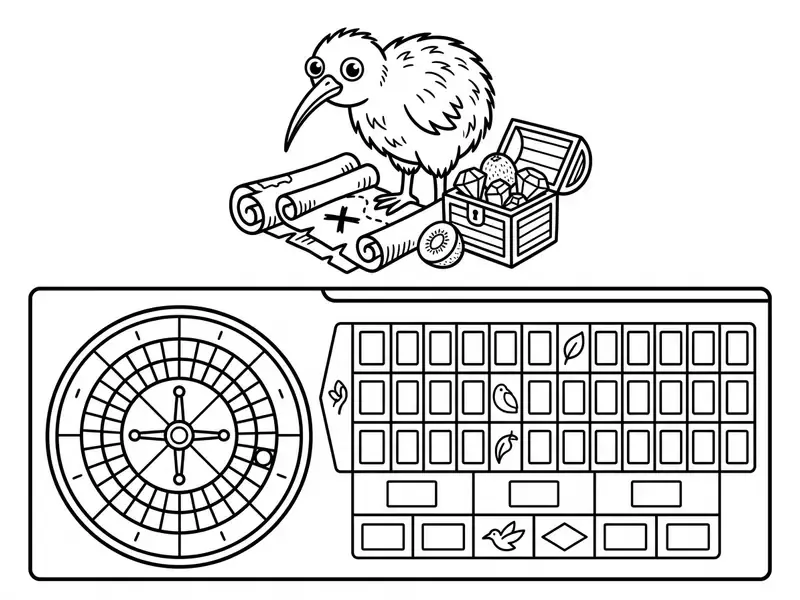
A standard European roulette table and wheel contain 37 corresponding pockets: numbers 1 through 36 distributed evenly between red and black, alongside a single green zero (0) pocket. The table layout arrays these numbers sequentially in a grid of three columns and twelve rows. On the wheel itself, the numbers are purposefully scrambled; they do not relate sequentially, in order to balance high/low and red/black distribution across sectors.
The green zero fundamentally represents the house edge. In the European game, the presence of one zero pocket sets a house edge of 2.70% (RTP of roughly 97.30%). American roulette features 38 pockets because it incorporates a double zero (00), effectively increasing the house edge to 5.26% (RTP of roughly 94.74%). For your bankroll, playing the American variation provides the exact same payouts but statistically lowers your odds of maintaining a stable session balance. That extra pocket makes a bigger difference than most people realise.

"European Roulette maintains a 2.70% house edge thanks to a single zero; American Roulette reaches 5.26% because of the double zero; French Roulette with La Partage reduces it to 1.35% on even-money bets." — PokerStars, Online Roulette Explained. https://www.pokerstars.com
When bets win and how rounds are settled
Winning outcomes occur solely when the ball cleanly drops into a number pocket that correlates with your placed chips. After the ball lands, the physical dealer typically indicates the winning number, but in a live online environment, this result confirmation is digitised simultaneously via the optical tracking system.
The payouts logic then cascades automatically. In semi-automatic live games, the digital software registers the win and clears the losing chips instantly. The dealer settles outside bets first, working from the bottom edge of the layout toward the zeros, and then moves to inside bets. Players are restricted from manipulating their chips on the digital board during the settlement cycle. This seamless logic protects the integrity of the round, preventing disputes over late bets or ambiguous chip placements while accurately dropping your payout balance directly into your account in real time.

Live roulette bets and payouts explained
Disclaimer: The information below is general in nature and does not replace professional advice. Gambling involves financial risk. If gambling stops being entertainment, seek help at Problem Gambling Foundation NZ: www.pgf.nz.
Live roulette supports two primary categories of wagers: inside bets and outside bets. The distinction pivots entirely on betting risk levels. The fewer numbers you cover with a single chip, the lower your chance of hitting, but the higher the relative payout applied to a win.
Every chip placed has a predefined probabilistic value. Understanding these variations helps you map out an approach that fits your actual budget instead of relying entirely on luck to sustain your playing time.
Inside bets
Inside bets involve picking particular individual numbers or tightly clustered groups formatted inside the core number grid. Options include:
- Straight-up (one specific number): click directly on the centre of the chosen number. Pays 35:1, win probability 2.70% (European).
- Split (two adjacent numbers): place your chip exactly on the line dividing the two numbers. Pays 17:1, win probability 5.41%.
- Street (a row of three): place your chip on the outside border line of the row. Pays 11:1, win probability 8.11%.
- Corner (four numbers forming a square): place your chip at the intersection where all four numbers meet. Pays 8:1, win probability 10.81%.
- Line (six numbers spanning two adjacent rows): place your chip on the junction of the outer border lines between the two rows. Pays 5:1, win probability 16.22%.
These are inherently higher-risk and higher-payout options. Quick maths: a successful NZ$10 straight-up bet on a European table carries a 2.70% probability of success and pays 35:1. You win NZ$350 plus your original NZ$10 stake. Because the mathematical odds are long, constantly chasing inside bets demands a bankroll resilient enough to endure substantial losing streaks. Or, to put it plainly, you need patience and discipline.

Outside bets and special bets
Outside bets provide broader coverage over the table geometry, encompassing traits like colour, odd/even parity, or large groups like dozens. They generally mirror a lower-volatility approach to the game.
Even-money style bets, such as Red/Black or High/Low (1-18 / 19-36), naturally feature a higher relative chance of winning, sitting at roughly 48.65% probability in European formats due to the singular zero. They yield a standard 1:1 payout. Dozens and Columns cluster 12 numbers together, carrying an approximate 32.4% success probability and returning a 2:1 payout.
Furthermore, live streams often cater to special track bets, sometimes called "call bets," that cover specific mechanical groupings on the wheel:
- Voisins du Zero covers the 17 numbers closest to zero on the wheel (between 22 and 25), requiring multiple chips to execute the full coverage pattern.
- Tiers du Cylindre covers one-third of the wheel: the 12 numbers between 33 and 27, placed as six split bets.
- Orphelins covers the eight numbers not included in Voisins or Tiers, using five chips.
These bets are accessed via the racetrack overlay on the digital interface. Specific availability depends on variant rules and provider capability. Not every live roulette table offers the full racetrack, so check before you sit down.
Popular Bet Types, Coverage, Risk and Payouts in European Live Roulette

| Bet Type | Numbers Covered | Win Probability (European) | Relative Risk Level | Classic Payout Ratio |
|---|---|---|---|---|
| Straight-Up (Inside) | 1 | 2.70% | High | 35:1 |
| Split (Inside) | 2 | 5.41% | High | 17:1 |
| Street (Inside) | 3 | 8.11% | High | 11:1 |
| Corner (Inside) | 4 | 10.81% | High | 8:1 |
| Line (Inside) | 6 | 16.22% | Medium | 5:1 |
| Dozens / Columns (Outside) | 12 | 32.4% | Medium | 2:1 |
| Red/Black, Odd/Even, High/Low (Outside) | 18 | 48.65% | Low | 1:1 |
Note: The risk levels reflect statistical hit frequencies. Higher payouts inherently involve higher volatility. Outside bets decrease session volatility but never override the house edge.
Live roulette variants available online
Modern live casinos have expanded well beyond simple formats, currently deploying dozens of nuanced variations. Players face a choice between standard pacing variants built on classical mathematics and highly modernised hybrid iterations that add visual flair or payout multipliers based on software overlays.
Three providers dominate the market: Evolution Gaming (approximately 45% of live-casino revenue), Playtech (approximately 30%), and Pragmatic Play Live (approximately 25%). From Lightning Roulette's charged payouts to standard-paced French and American versions, reviewing the underlying house-edge differences and the pace of each variant is your main defence against rapid budget depletion.

European, American, and French live roulette
The primary distinctions across classic variants concern the zero layout and minor rules differences, which dramatically alter house-edge implications. As outlined earlier, standard table formats for European roulette maintain a 2.70% house advantage given its single-zero layout (RTP of roughly 97.30%). American roulette introduces a secondary "00" pocket, fundamentally increasing risk by locking the house advantage at 5.26% (RTP of roughly 94.74%). American roulette also permits a unique "basket bet" covering 0, 00, 1, 2, and 3; this carries the worst odds on the board.
French live roulette presents the most favourable condition for players. While structurally identical to the 37-pocket European setup, it introduces the player-friendly La Partage rule.

"French Roulette drops the house edge to 1.35% on even-money bets via La Partage or En Prison rules, completely returning half the stake when zero occurs." — PokerStars, Online Roulette Explained. https://www.pokerstars.com
If you intend to play outside, even-money wagers, limiting your play heavily to French tables is the clearest mathematical choice available. It really is that straightforward.
Speed, auto, and multiplier versions
If standard environments feel too slow, providers have introduced variations that drastically alter speed and gameplay. Auto Roulette removes the live dealer in favour of a mechanically rotated, streaming wheel. It ensures rapid, highly frequent rounds, often under 25 seconds per cycle, but removes the social interaction and extends typical limits down to micro stakes.
Speed Roulette cuts standard betting times directly in half, accelerating the full progression of betting to payout down to roughly 25 seconds per cycle while retaining a live dealer.
Multiplier-heavy environments, such as Lightning Roulette (launched by Evolution Gaming in 2018), stand out uniquely. Before each spin, an RNG system selects one to five "lucky numbers" and assigns each a random multiplier ranging from 50x up to 500x. These multiplied payouts apply exclusively to straight-up bets on those highlighted numbers. The honest trade-off: the base payout for a standard straight-up bet is reduced from 35:1 to 29:1 to fund the multiplier pool, meaning the overall RTP remains approximately 97.30%. This structure produces significantly higher variance for players willing to sacrifice standard baseline returns for the slim possibility of hitting a massive payout. Similar variants include Quantum Roulette and XXXtreme Lightning Roulette.

Immersive, Mini, and Multi-Wheel roulette
Beyond speed and multiplier tables, several additional formats cater to niche preferences:
- Immersive Roulette (Evolution) uses cinematic slow-motion replays of the ball drop and dynamic camera angles to create a dramatic, TV-quality viewing experience. It suits players who enjoy the visual spectacle as much as the game itself.
- Mini Roulette features only 13 pockets (numbers 1 to 12 plus a single zero), offering faster rounds but a substantially higher house edge of approximately 7.7%. It suits players seeking quick, simplified rounds, though the maths is less kind to your bankroll.
- Multi-Wheel Roulette allows a single player to bet on multiple wheels simultaneously, increasing action density per round. Each wheel operates independently, so a single bet can generate several outcomes at once.

How to choose the best live roulette online casino
Identifying the best live roulette online hub relies on scrutinising technical limits and compliance details, not flashy marketing lines. With New Zealand enacting the Online Casino Gambling Act and preparing stringent licensing measures for 2026, comparing operators heavily revolves around player safety, operational software quality, and reliable payment systems.
You need to verify the game selection depth, assess available welcome bonuses honestly against steep standard wagering demands, verify maximum and minimum operating table limits, and secure an overall trust profile matching the NZ compliance mandate built on harm-minimisation standards. PlayWise NZ's approach is to surface these criteria transparently, so you can compare on facts rather than advertising copy.

Game selection, providers, and table limits
A premier iGaming lobby should grant you unhindered access to software deployed by industry-leading providers. Live casinos powered by groups like Evolution Gaming, Playtech, and Pragmatic Play Live provide stable 4K streams, deep cross-compatibility for mobile browsers, and expansive coverage of standard versus premium tables.
Always assess minimum and maximum table limits before dedicating your bankroll. Low-budget players require a casino providing tables with NZ$0.50 limits, whereas high bankrolls demand stable VIP access. By reviewing an interface's parameters ahead of play, you ensure the operator respects your financial boundaries without aggressively corralling you into roulette games operating completely outside your realistic comfort zones.

Bonuses and wagering reality for live roulette
One thing to watch closely is the reality of bonus terms when interacting exclusively with live tables. Standard bonus logic generally isolates live roulette players through extremely poor wagering contribution percentages. In live roulette, the percentage of a bet counted toward wagering typically varies strictly from 5% to 10% of the total amount, usually facing x30 to x45 baseline multipliers (industry analysis of bonus conditions, not an official regulatory document from DIA).
Quick maths: securing an NZ$40 bonus matched with a x30 requirement demands NZ$1,200 in total wagers for a 100%-contribution slot. For live roulette at 10% contribution, you must churn an astounding NZ$12,000 before initiating a withdrawal. That number alone should give you pause. Always read the full terms in plain English before opting in.

Mobile play: what to expect on a smaller screen
Over 60% of online gambling sessions now take place on smartphones. On mobile, the live roulette interface typically switches between a full-screen video feed and a betting-grid overlay. Most providers allow you to pinch-zoom onto the wheel or expand the statistics panel. Betting is handled by tapping chip denominations and then tapping the relevant board position, the same logic as desktop but optimised for touch.
Key points for mobile players:
- Ensure your device runs on a stable Wi-Fi or 4G/5G connection (5 Mbps minimum, 10 Mbps recommended).
- Close background apps to preserve bandwidth and battery.
- Portrait mode usually defaults to a split view (stream on top, betting grid below); landscape gives a wider table view.
- If your connection drops mid-spin, the round continues on the server. Your placed bet stands, and the result will appear in your transaction history once you reconnect.

Trust verification checklist
Trust Checklist: What to verify before depositing
- Licensing:Valid licence from a reputable regulator (MGA, UKGC, or NZ transitional standards under the 2026 framework).
- Fairness audit:Open certificates from eCOGRA or iTech Labs confirming independent randomness and payout testing.
- Payment transparency:Clearly published withdrawal timeframes (ideally under 24 hours) with no hidden fees when processing NZ dollars. Popular NZ methods include Visa/Mastercard, Skrill, POLi, and bank transfer.
- Bonus conditions:Clear disclosure of wagering-contribution rates for live casino games. If the terms are buried or vague, that is a red flag.
- Responsible gambling tools:Flexible player-set deposit limits, loss limits, session time reminders, and instant self-exclusion options.
How to play live roulette online step by step
Starting to play live roulette online is structurally straightforward but demands attention to licensing, payment processing, and table selection. To ensure a secure experience, the journey requires picking a verified platform, understanding local New Zealand payment mechanisms, securing an initial budget, and formally joining the active table.
Every stage in this gameplay flow, from the very first deposit to observing the spin mechanics, moves quickly once you hit the lobby. Familiarising yourself with the precise steps minimises the likelihood of panic-betting right as the timer is about to expire.

From choosing a casino to joining a live table
The review method for choosing a casino begins squarely on compliance. The first step involves selecting a platform regulated either by reputable offshore bodies (MGA, UKGC) or operating under the latest compliance frameworks, such as the NZ Online Casino Gambling Act. Account setup traditionally requires name, email, and age verification to ensure players meet the 18+ legal gambling age requirement.
When assessing a portal's reliability, the described protocol involves routing a fresh NZ$50 deposit through standard local payment platforms: Visa, Mastercard, Skrill, or bank transfer. This action maps the specific clearance time into the ecosystem, showing whether properly licensed operations grant instant access and identifying a transparent 24-hour baseline for future withdrawals. Finding a suitable lobby follows the deposit. Once logged in, operators group available tables by provider (e.g., Evolution, Playtech, Pragmatic Play Live), highlighting variants and specific minimum/maximum betting limits. Take a moment to browse before jumping in.

How a live round works from bets to payout
Once seated, the functional pace of the round takes over. The interface signals that you can place bets, presenting a countdown timer that grants between 15 and 25 seconds for decision-making. You select your chip denomination and place your bets directly onto the digital table grid.
The moment the timer hits zero, a "bets are closed" notification appears, and the dealer immediately initiates the wheel spin. The dealer spins the wheel counter-clockwise, and the ball in the opposite direction; once the ball settles, winnings are automatically displayed and paid. Because the OCR technology tracks the physical wheel in real time, the payout sequence triggers automatically through the casino software system. Losing positions are cleared from the interface, and winning payouts are immediately credited to the player balance.
What happens if your internet disconnects? If your connection drops after bets close, the round continues on the casino server. The ball still lands, the result is still recorded, and any winnings are credited to your account. When you log back in, the outcome will appear in your transaction history. You will not lose your bet due to a disconnection; only the live video feed is interrupted, not the game logic. That is one less thing to worry about.


Text backup: 1) Choose a licensed casino. 2) Register and verify. 3) Deposit funds. 4) Open live table lobby. 5) Place your bets. 6) Bets close (timer ends). 7) Wheel spin and ball lands. 8) Automatic payout calculation.
Tips for a better live roulette experience
Disclaimer: The information below is general in nature and does not replace professional advice. Gambling involves financial risk. If gambling stops being entertainment, seek help at Problem Gambling Foundation NZ: www.pgf.nz.
A highly structured approach beats instinct when engaging with any casino layout. To shape a more reliable and enjoyable live roulette experience, you must manage your budget proactively and pick variations strictly matched to your personal financial limits.
Do not subscribe to pseudo-strategies promising a system to "beat the odds." Statistically, the wheel operates in absolute randomness and the house retains its fixed edge indefinitely. Stick to disciplined money control, consciously avoid chasing losses, and start completely on standard formats before entering rapid or highly volatile gaming rooms.

Bankroll and session control before you play
Your call. You decide where your baseline lives. Bankroll frameworks widely recommend locking down a session budget consisting of 40 to 50 base-bet units to prevent catastrophic rapid depletion. Your standard wager should never aggressively exceed 1% to 3% of your active session budget. Set a stop-loss at 20 to 25% of your session bankroll, and consider setting a win goal at 20 to 30% of your starting amount to lock in gains.
Never increase your unit size as a tool to recoup losses. The gambler's fallacy, believing past spins influence future results, is a top rookie error leading to poor decisions. Placing a hard limit on losses at 20% to 25% of the total session guarantees structural safety. It sounds boring, but boring keeps your bankroll alive.

"Live dealer games are structured for rapid, frequent play, encouraging immediate betting and loss-chasing; this is especially risky for players prone to impulsive behaviour." — Birches Health, Live Dealer Casino Harm Analysis (2025). https://www.bircheshealth.com
Research into behavioural markers also notes that participation in live (rather than simulated) table games is one of the structural product configurations most closely associated with risky gambling patterns. — Behavioural Markers Study, UK/Australia peer-reviewed (2023). https://www.bonus.com/gambling-research/behavioural-markers/
PlayWise NZ's core philosophy advocates activating built-in deposit-awareness constraints directly from the casino's Responsible Gambling portal before you place your first active chip on the felt. Keep sessions short, ideally 45 to 60 minutes, and take regular breaks. Use a bankroll tracker to log every session: start time, end time, stakes, and result. Even a simple spreadsheet helps you spot patterns you might otherwise miss.

Choosing the right table for your style
Choosing between standard versus multiplier tables dramatically alters your trajectory. For beginners mapping out the landscape for the very first time, stick primarily to structurally simple European variants featuring low micro-limits.
Multiplier environments severely hike long-term volatility. The pace, limit restrictions, and dealer interactions should match your player comfort. Slower tables permit careful bet selection and a calm experience entirely devoid of countdown panic. Read the board, review the payout maths clearly, and execute decisions without urgency.
Explore the licensed parameters of the platform deliberately, read the bonus terms in plain English first, and ensure you retain absolute control over your deposit limits. Play for fun, and step away when the session reaches a natural end. If you are unsure where to start, a French roulette table at minimum stakes is a sensible first choice: lowest house edge, relaxed pace, and room to learn.

FAQ: Live Roulette Questions Answered
Is live roulette rigged?
No. Live roulette uses a physical wheel and ball. The outcome is determined by real-world physics, not software algorithms. Studios are monitored by multiple HD cameras, and results are independently audited by bodies like eCOGRA and GLI using rigorous statistical tests. The house edge (2.70% European, 5.26% American) is the casino's built-in mathematical advantage. It does not require rigging to be profitable.
Can I play live roulette for free?
No. Live dealer tables require real-money bets because they involve real dealers, physical equipment, and streaming infrastructure running in real time. If you want to practise first, RNG roulette games often offer a free-play or demo mode where you can learn bet types and interface mechanics without financial risk.
What is the minimum bet at a live roulette table?
Most live tables start at NZ$0.50 to NZ$1.00, though some auto roulette tables go as low as NZ$0.10. VIP and Salon Prive tables can accept bets of NZ$10,000 or more per spin.
What happens if my internet disconnects during a spin?
Your bet stands. The round continues on the casino's server regardless of your connection status. When you log back in, the result and any winnings will be visible in your account history.
Which live roulette variant gives the best odds?
French Roulette with La Partage. The house edge drops to 1.35% on even-money bets. European Roulette at 2.70% is the next best option. Avoid American Roulette (5.26%) unless you specifically want the double-zero layout.
Do bonuses work on live roulette?
Technically yes, but contribution rates are extremely low, typically only 5 to 10% of each bet counts toward wagering requirements. A NZ$40 bonus with a x30 multiplier could require NZ$12,000 in live roulette wagers before withdrawal. Always check the terms before opting in.
What internet speed do I need?
A minimum of 5 Mbps is recommended for smooth streaming; 10 Mbps or higher is ideal for HD quality. Use a wired Ethernet connection if possible, and close bandwidth-heavy background apps.